NEWS
Project Year 2 Research Highlights from RIO-NM
3 minutes
By
Brittney Van Der Werff
The Research Infrastructure Optimization for New Mexico (RIO‑NM) NSF E‑CORE project, led by NM EPSCoR, continued to gain momentum in Project Year 2. This year, the team reported several notable achievements to the National Science Foundation (NSF) that underscore RIO‑NM’s sustained commitment to strengthening research capacity across New Mexico. Below are two research highlights submitted to NSF as part of the Year 2 Annual Report.
Training Tomorrow’s Scientists Through Cutting‑Edge Research on RNA Repeat Dynamics at NMHU
What is the outcome or accomplishment?
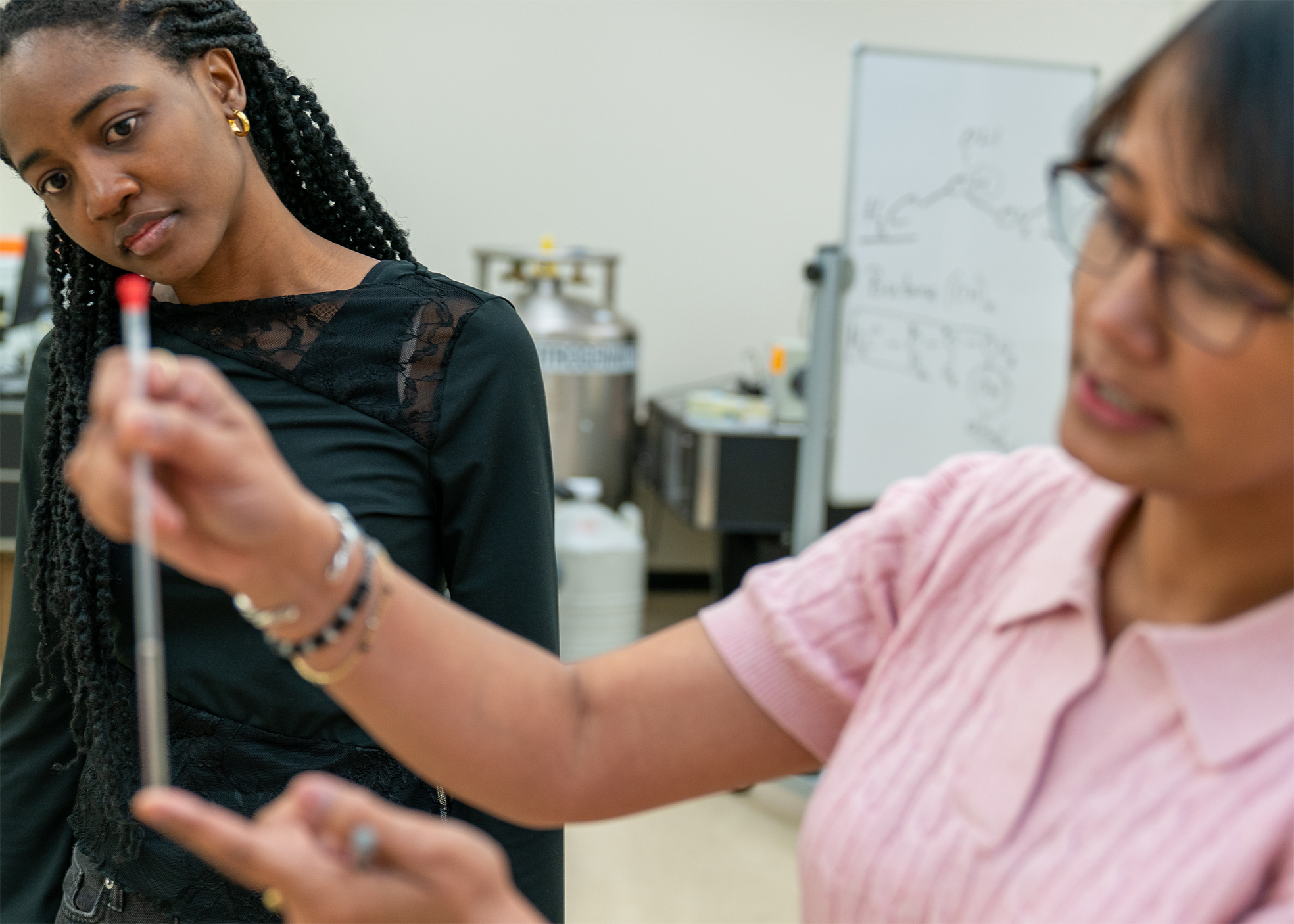
Assistant Professor Nabanita Saikia and her students at New Mexico Highlands University (NMHU) are utilizing computational biophysics to investigate how certain plant compounds can disrupt molecular malformations associated with neurodegenerative diseases at the biological level.
What is the impact?
This RIO-NM-funded project will strengthen computational biophysics research capacity at NMHU and provide hands-on training for undergraduate and graduate students in advanced computational methods. The findings will foster experimental collaborations across New Mexico’s academic institutions and further fundamental research around nucleic acid biophysics.
What explanation/background does the lay reader need to understand the significance of this outcome?
The NMHU research team is advancing nucleic acid biophysics by studying the folding dynamics and structural features of r(CAG) trinucleotide repeats linked to neurodegenerative diseases like Huntington’s. These repeats form hairpin structures stabilized by mismatched A·A base pairs, creating unique sites where small molecules can selectively bind. Using quantum mechanical calculations, molecular docking, long-timescale molecular dynamics, and machine learning modeling, the team aims to uncover how a chemically diverse class of flavonoid molecules interacts with r(CAG) trinucleotide repeats at the atomic level. Beyond supporting fundamental research, this project carries a meaningful workforce development dimension as well, giving rural university students experience in hands-on biophysical chemistry research that most of their peers only encounter at R1 institutions.
Mapping Economic Development in New Mexico through Cyberinfrastructure-enabled Remote Sensing and AI
What is the outcome or accomplishment?
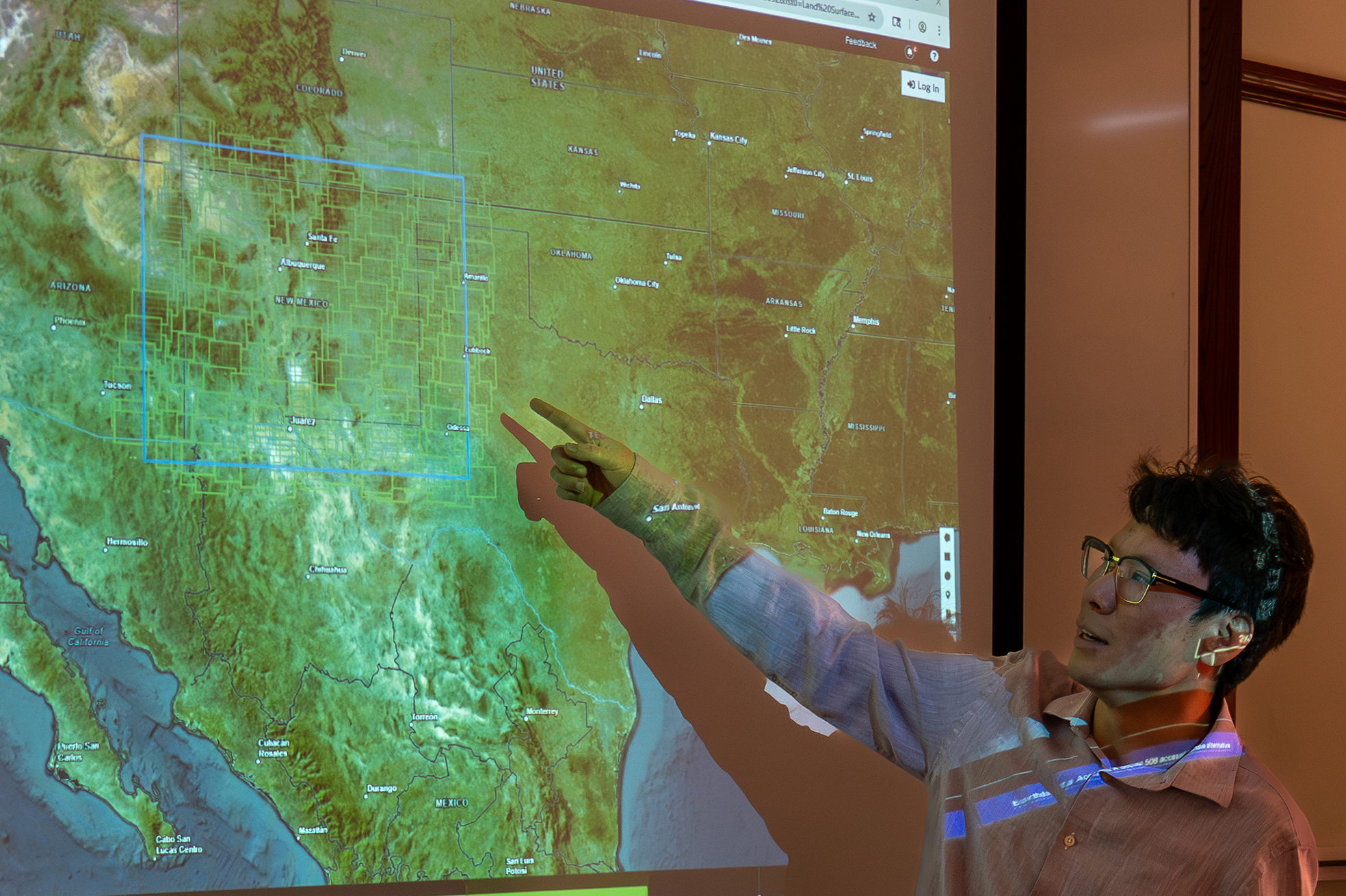
Lead investigator Jiakai Zhang and co-PI Jun Zheng at the New Mexico Institute of Mining and Technology are creating New Mexico’s first high-resolution Economic Development Index, transforming how rural and underserved communities are measured and enabling more targeted, data-driven investment decisions across the state.
What is the impact?
This RIO-NM-funded project will result in an interactive online map that helps policymakers and community leaders easily identify local disparities and make more informed decisions about investments in infrastructure, broadband, and job creation. It will also enhance planning and resource allocation in rural and underserved communities.
What explanation/background does the lay reader need to understand the significance of this outcome?
Traditional surveys often fail to capture fine-scale economic conditions in rural and tribal areas, while satellite observations alone lack socioeconomic context. This project will develop AI models that analyze road networks, land use patterns, and nighttime lights to predict economic indicators such as income and employment where survey data are sparse, validating these estimates against existing census data. These predictions, combined with current datasets, will support the construction of a new index using advanced AI methods to quantify development levels across New Mexico.
By creating a more detailed and spatially precise picture of development across the state, the project will provide a new tool for research, policy, and community planning. The project also strengthens New Mexico’s tech workforce by hosting a hands-on workshop in AI and geospatial analytics for undergraduate and graduate students.