NEWS
2026 Seed Award Projects Advance Rural Healthcare, Earthquake Monitoring, and AI in Archaeology
4 minutes
By
Brittney Van Der Werff
Three proposals have been selected for 2026 NM EPSCoR RIO-NM Seed Award funding, with each project receiving $50,000 to support transformative research and capacity building. The first project, a multi-institutional collaboration led by PI Sungjin Kim (UNM) and co-PI Tara Newar (CNM), focuses on developing 3D-printed bone scaffolds to improve orthopedic care in rural New Mexico communities. The second project, led by PI Urbi Basu and co-PI Asiye Aziz Zanjani (NMT), will improve earthquake detection and hazard assessment in the Permian Basin. The third project, led by PI Sarbagya Ratna Shakya with co-PIs Elizabeth Lynch and Edgar Ceh-Varela (ENMU), will develop AI tools to automate archaeological artifact interpretation while supporting Indigenous data sovereignty.
2026 RIO-NM Seed Award Recipients
Additive Manufacturing of Bioinspired Bone Scaffolds for Digitally Enabled Rural Orthopedic Support and STEM Workforce Development in New Mexico
PI: Sungjin Kim, UNM
Co-PI: Tara Newar, CNM
Amount: $50,000
New Mexico experiences a high burden of bone injuries, trauma, and degenerative diseases that require complex orthopedic care, yet many rural and remote communities lack consistent access to orthopedic specialists. This project addresses that gap by developing chemically engineered, 3D-printed scaffolds that can be manufactured on demand and patient-specifically at or near the point of care from digitally shareable designs, reducing dependence on centralized supply chains while strengthening New Mexico’s capacity in chemical, biomedical engineering, and materials science. The research integrates polymer and inorganic chemistry with additive manufacturing (AM) to create polylactic acid (PLA) scaffolds coated with bioinspired hydroxyapatite (HAp) precursors generated via a CO2-mineralization process mediated by the plant-derived polyphenol tannic acid (TA). In this study, we will design scaffolds with controlled porosity and mechanical properties, study the transformation of polyphenol-stabilized vaterite into HAp under simulated physiological conditions, and evaluate both the anti-inflammatory potential of TA–containing coatings and the use of antibiotics for localized drug release in contaminated or chronic bone defects relevant to delayed care in rural settings.
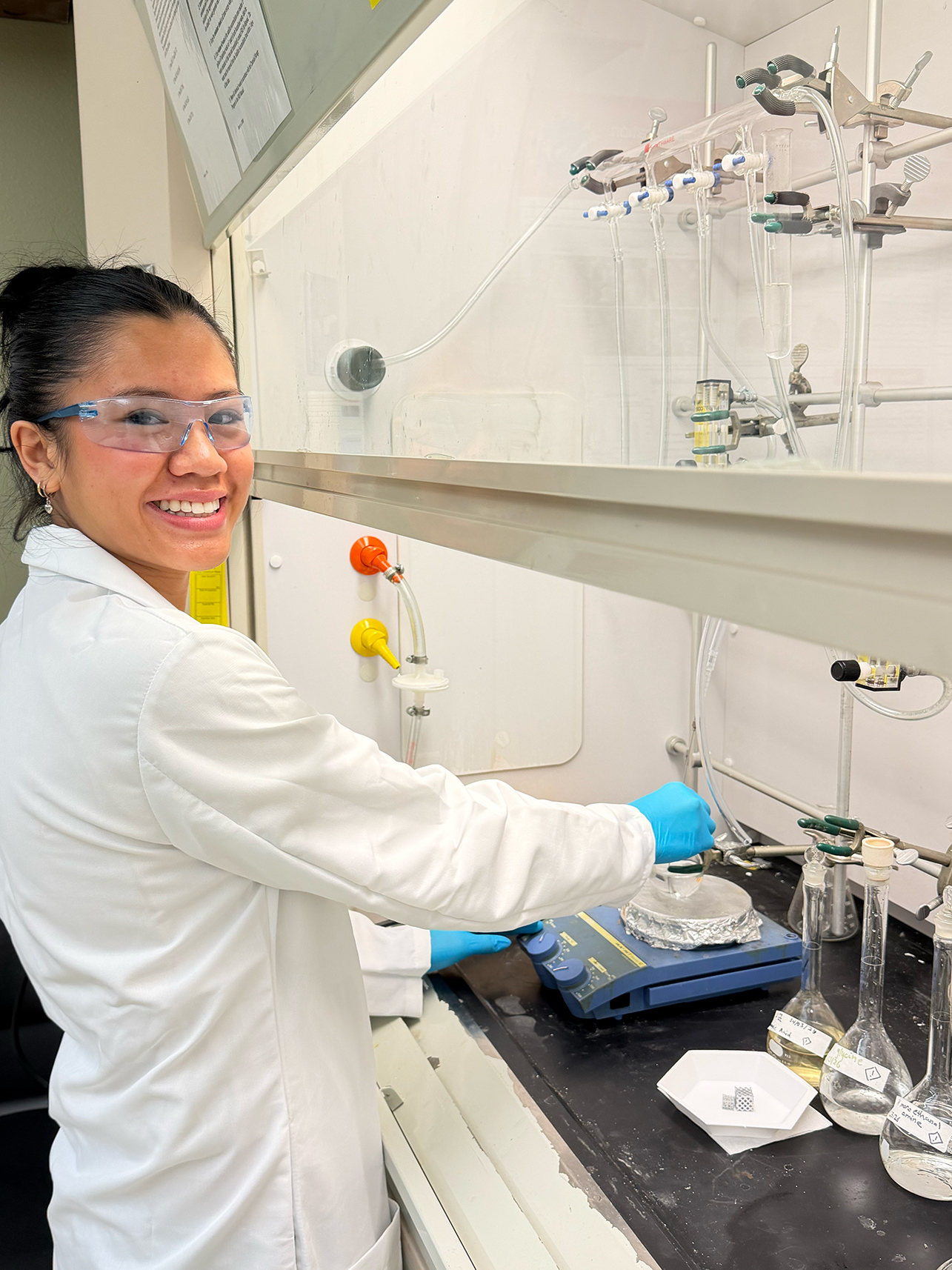
This project aligns with New Mexico’s Science and Technology Plan priorities in biosciences and advanced manufacturing. It will engage undergraduate students from UNM and CNM in hands-on training in CAD, G-code generation, scaffold fabrication, mineralization, and materials characterization. The work will strengthen regional cyberinfrastructure, support scalable on-demand scaffold production, and help develop a diverse, highly skilled STEM workforce for New Mexico’s growing biosciences and advanced manufacturing sectors.
Shallow Subsurface Characterization of the Permian Basin Using Dense Seismic Nodal Array
PI: Urbi Basu, NMT
Co-PI: Asiye Aziz Zanjani, NMT
Amount: $50,000
Earthquakes induced by anthropogenic activities, also known as induced seismicity, have recently emerged as a significant geologic hazard in the Permian Basin of southeast New Mexico and Texas. Most of these earthquakes are small and occur at shallow depths, making them difficult to locate accurately. Current subsurface seismic velocity models do not capture near-surface and local velocity discontinuities accurately, leading to uncertainty in estimating earthquake depth and location. This uncertainty limits the ability of the state agencies, researchers, and industry operators to spatially correlate daily operations with seismic sources and make timely, informed decisions on public safety and risk mitigation. This project aims to improve earthquake monitoring by building a high-resolution seismic velocity model for the Delaware Basin. We plan to deploy around 200 temporary seismic nodes across southeast New Mexico. This dense network will significantly improve the imaging resolution of the shallow subsurface strata. Using ambient noise, we plan to develop a detailed three-dimensional shallow crustal shear-wave velocity model by inverting surface-wave dispersion. The results will help in locating earthquake depths more accurately and reduce bias in earthquake location and origin time.
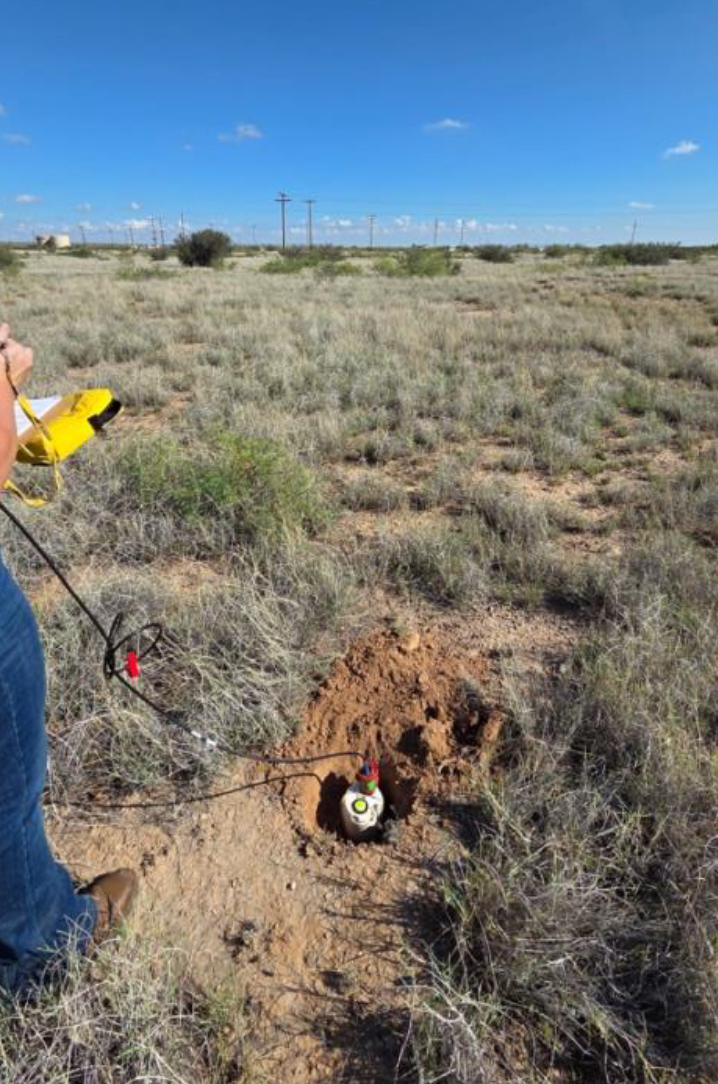
Credit: Urbi Basu, NMT
This improved subsurface velocity model will support better hazard assessment and reveal the heterogeneous structure in the basin, with implications for oil and gas exploration. Additionally, this study will potentially serve as a pilot for a larger, longer-term effort to build a comprehensive regional seismic velocity model for the northern Permian Basin.
Tiny Vision–Language Models (VLMs) for Automated Archaeological Artifact Interpretation
PI: Sarbagya Shakya, ENMU
Co-PIs: Elizabeth Lynch and Edgar Ceh-Varela, ENMU
Amount: $50,000
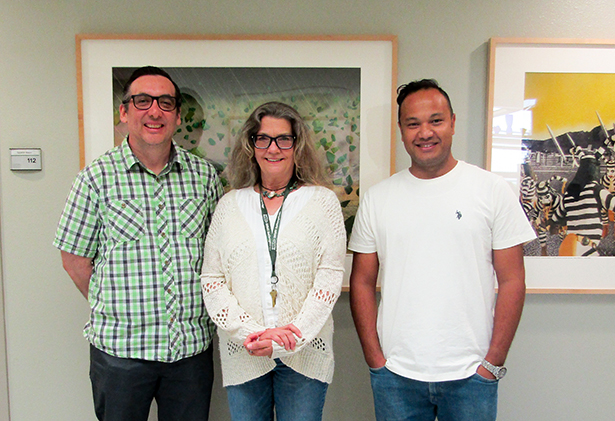
Interpreting archaeological digital data is a labor-intensive bottleneck requiring specialized expertise. While 3D photogrammetry accelerates data collection, generating meaningful narratives about past human behavior remains challenging. This project addresses this gap by developing a specialized Tiny Vision-Language Model (TinyVLM) to automate the preliminary interpretation of archaeological artifacts. We will utilize a curated dataset of high-fidelity 3D photogrammetric models of ground stone tools (hammerstones, abraders, hematite nodules, and palettes) from the Hell Gap National Historic Landmark, dating from 12,000 to 8,000 years ago.
To process this, we will translate 3D meshes into multimodal training datasets and apply advanced AI optimization, including Parameter-Efficient Fine-Tuning (LoRA), Teacher-Student Knowledge Distillation, and weight quantization, to compress the model for offline inference on edge hardware. Unlike massive, cloud-dependent AI, TinyVLMs combine computer vision with natural language reasoning on low-power, portable platforms. By enabling on-device interpretation without internet connectivity, the system ensures Indigenous data sovereignty and strengthens connections between descendant Native American communities and their material heritage. Furthermore, this project serves as a powerful catalyst for ENMU’s workforce development, directly funding and training undergraduate students across Computer Science, Electronics Engineering Technology (EET), and Anthropology. By bridging Edge-AI with heritage preservation, this project establishes a robust inter-departmental collaboration, accelerates Cultural Resource Management workflows, and positions ENMU as a highly competitive leader for future federal funding (e.g., NSF, NEH) in the emerging field of Cultural AI.